Subscribe and submit as many essays as you need. AI marks your work against the NESA band descriptors for your exact module and returns detailed feedback using an AI analytical framework trained on state ranking resources.
The student portal as it is today, with a real marked essay. Pick a part, or let it play.
rethinkhsc.com/portal
ReThinkHSCStudent PortalSubmit WorkJ
Module C — ImaginativeImage-stimulus question
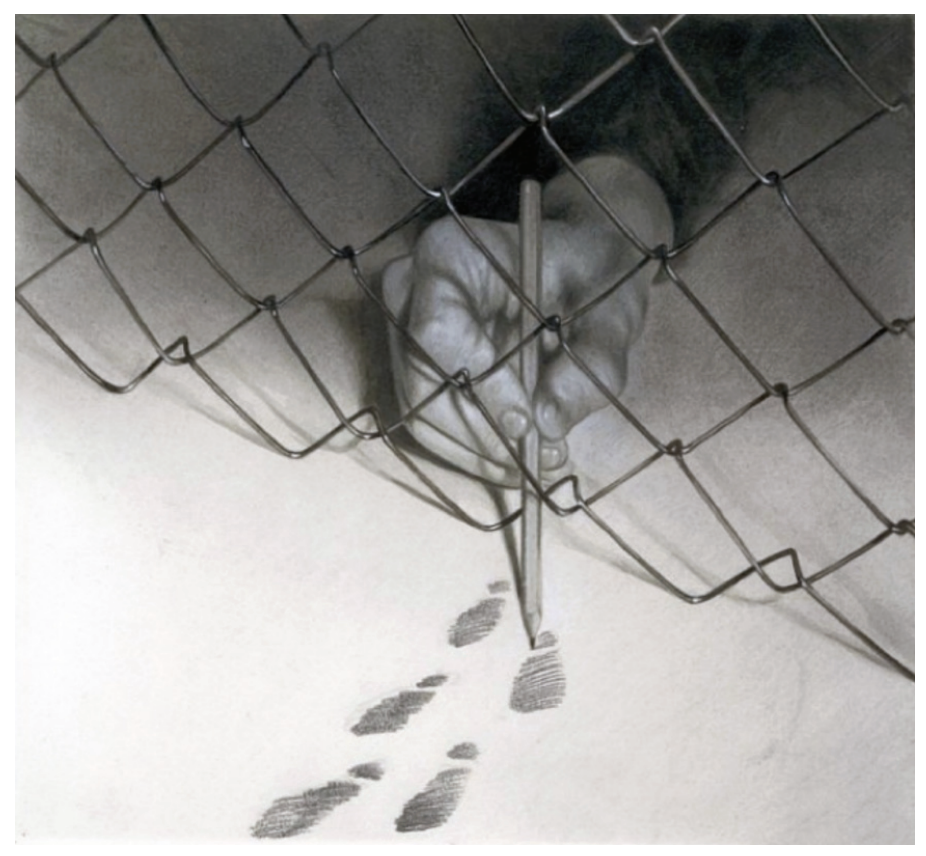
Question. Use the image provided to craft a central metaphor in a piece of imaginative,
discursive or persuasive writing.
Part 1 — Imaginative Piece
9/10
Band 6
Overall feedback
This is a sophisticated and distinctive piece that transforms the stimulus into a sustained extended metaphor of darkness as both sanctuary and captor. The first-person monologue voice is immediately recognisable and controlled throughout, with the interview format providing an engaging structural framework. The piece demonstrates mastery of technique integration—the shadow/darkness motif evolves organically from escape to companion to killer, creating genuine emotional resonance without sentimentality.
Voice & Expression9/10
Craft & Structure9/10
Technique Integration9/10
Stimulus Engagement9/10
What is working
Distinctive, controlled first-person voice that balances weariness, self-awareness, and defiance without melodrama—'Well I am not dead' through to 'my shadow was the devil in disguise' reveals a narrator who is both trapped and philosophically reflective
Masterful extended metaphor of darkness/shadow that evolves organically from sanctuary to captor to killer, carrying both narrative progression and emotional weight—the metaphor cannot be separated from the meaning
Sophisticated technique integration where every element serves the piece—the Elvis allusion, the orange cylinder detail, the personification of darkness, the interview format all enhance rather than decorate
What to fix first
Tighten the middle section so its accumulation drives toward the climax rather than delaying it
Develop the closing legacy pivot with the same specificity and sustained metaphor as the darkness exploration to balance the piece
Replace the few generic phrases with the precise, original language that defines the rest of the writing
Your Response
612 words
Long Live The King16th August 1977How did you die?Well I am not dead -
Down there, I was mentally and physically a shell of my former self. I could not escape the repetitive nature of life.Day after day after day after day... I clambered to the stage at Westgate; each time I reached the top, I felt my shadow grow larger, slowly swallowing me as the days passed.It took away the sparkle reflected on the stage by the jewels that ran down my red collar. Instead they appeared as specks of dirt slowly infecting the stage like the plague as I moved across it.The audience would applaud, their claps passing straight through me, and the ladies would reach for my hands and hold on to them, pulling me closer, and I let them. I was detached from the physicality of it.They would let go screaming and yelling out, 'I touched him! I touched him!' but they weren't touching me – only an illusory entity; they could touch my hands, flesh gripping theirs, but I was not there; I never was.I was a shadow and had been for a long time.The darkness became my sanctuary, my haven when the stage went black. A place I was able to recharge and forget about the world. I was equal in the darkness; you could not tell me from those in the crowd.It stole my form, and I was complicit in its crime. The lights would then flicker back and remind me of the void I had become, so I chased the feeling of darkness back to an orange cylinder with a white cap in the drawer underneath the sink in my bathroom.The pills fed me with serenity and peace; they teleported me into the darkness, letting it swallow me, feeding more and more of my soul to it, enlarging my shadow.So as I clambered onto the stage, I could feel the figure that chased me grow. It had begun to overtake me, reaching the stage before I had; it was seated at the piano before I was. Maybe, it was just playing its part, acting as if the world were its stage, but as the curtains hit the floor, the stage was bare, and the two of us were standing there.Deep down I knew my shadow was the devil in disguise.Yet every night darkness and I were the only ones at the dinner table, we sat opposite one another.Each night when I found my way to the bathroom darkness was already there. It stood strong against the door, beckoning me to befriend the orange cylinder in the drawer and fall further into its captivity.So when I found myself curled over on the side of my bed, darkness was there holding me tight, it was there on my most lonesome nights and when I felt I could cry, it let me surrender myself into its arms hugging me in its cold embrace.The darkness held me tight and wouldn't let me go. It had consigned me to a life sentence
-------
So you ask? How did I die? Medically my heart stopped. But really, my death was prescribed to me by the pills.But still, I am not dead – I live on through the beats and rhythms you hear as you drive to work in the morning, the ones you listen to at school, the ones you dance to on a Saturday night.My music shall leave the world with the strength to continue. To fall in love, find joy, happiness, peace, and everything that darkness stole from me.
Comments
21 on your writing
Detailed analysis — sections, craft, structure
Central Idea & Purpose
Your Central Idea:
"Fame and addiction create a darkness that consumes identity and presence, but artistic legacy transcends physical death and offers what life could not."
Clear Purpose
Clarity:
92%
The piece develops this central idea with consistency and depth. The darkness metaphor carries the exploration of fame's emptiness, addiction's grip, and the paradox of physical death versus artistic immortality. The only slight gap is that the legacy section, while effective, is briefer and less developed than the darkness exploration—it feels slightly rushed compared to the sustained development of the shadow metaphor.
Part 2 — Reflection / Justification
8/10
Band 5
Overall feedback
This reflection demonstrates strong conceptual understanding and sophisticated engagement with Nam Le's craft, showing clear awareness of how studied texts inform creative choices. However, it remains heavily focused on thematic and theoretical connections to Le rather than providing detailed justification of specific craft decisions in the student's own piece. The analysis is intellectually rigorous but needs more concrete examination of how particular techniques function within Long Live the King.
Justification Depth7/10
Craft Awareness8/10
Conceptual Link8/10
Expression & Structure7/10
What is working
Sophisticated engagement with Nam Le's craft, demonstrating genuine understanding of how studied texts inform creative practice and showing strong Module C conceptual awareness
Excellent use of literary metalanguage and analytical expression—the writing is precise, intellectually rigorous, and demonstrates strong command of craft terminology
Effective analysis of voice as a craft element, particularly the insight that 'voice functions as a fragile negotiation between authenticity and performance' which shows metacognitive awareness
What to fix first
Analyse your own craft choices in the creative piece, not just Nam Le's influence
Ground every theoretical claim in a concrete moment from your writing and the effect it creates
Address the stimulus requirement explicitly by explaining how the image shaped your central metaphor
Your Response
262 words
My piece Long Live the King explores how performance becomes a means of resurrecting and reinterpreting the past, inspired by Nam Le’s interrogation of art as both an act of remembrance and self-erasure in Love and Honour. Le’s work illuminated for me the fraught relationship between identity and inheritance, how the artist’s attempt to translate inherited trauma into art inevitably distorts what it seeks to preserve.
Le’s narrative voice, poised between intimacy and detachment, shaped the emotional axis of my piece. His admission, “He told me the story as though it belonged to someone else,” exposes the alienation that underpins intergenerational storytelling: the impossibility of fully owning inherited pain. Similarly, my protagonist’s insistence, “I am not dead,” becomes a futile declaration of autonomy, a voice straining to assert selfhood against the consuming myth of his fame. In both works, voice functions as a fragile negotiation between authenticity and performance, revealing how identity is constructed through repetition and self-mythologising.
Le’s fragmented structure and oscillation between irony and pathos informed the formal architecture of Long Live the King. I mirrored this through the interplay of live performance and voice-over, collapsing the boundary between performer and persona to evoke the instability of memory. Le’s line, “It’s not that I don’t believe in ghosts. I just don’t believe in them for myself,” guided this tension: my character becomes both the ghost and the medium, performing his legacy even as it consumes him. Repetition and sonic layering, echoes of “But still, I am not dead” function as recursive motifs that trace his descent from icon to apparition.
Comments
4 on your writing
Detailed analysis — sections, craft, structure
Central Idea & Purpose
Your Central Idea:
"Long Live the King uses voice, fragmented structure, and repetition—informed by Nam Le's exploration of identity and inheritance in Love and Honour—to examine how performance consumes authentic selfhood, creating a protagonist who exists as both ghost and medium of his own legacy."
Clear Purpose
Clarity:
65%
The thesis is intellectually sophisticated and clearly articulates the thematic purpose of the piece. However, it doesn't fully address the stimulus requirement (crafting a central metaphor from an image) and focuses more on conceptual influence than on specific craft justification. The reflection would be stronger if it explicitly stated: 'My central craft decision was to use [X technique] to achieve [Y effect] for [Z audience/purpose].' Coverage is limited because key craft elements (shadow metaphor, imagery, structural choices like the date opening and abrupt ending) are not discussed.